When people hear the word “furnace,” they usually picture gas flames and a big metal box in the garage. But a significant number of Louisiana homes heat with electricity instead of natural gas, and the system that makes that possible is called an electric furnace.
If you are trying to understand what you have in your home, comparing options for a new heating system, or just trying to make sense of a technician’s recommendation, this guide covers everything you need to know about electric furnaces in plain language.
What Is an Electric Furnace?
An electric furnace is a heating system that uses electrical resistance to generate heat and distributes that heat through your home using a blower and your existing ductwork. It looks similar to a gas furnace from the outside, connects to the same duct system, and works alongside your central air conditioner in the same way.
The key difference is the heat source. A gas furnace burns natural gas to create heat. An electric furnace runs electricity through heating elements, similar to the way an electric stovetop or hair dryer works. Those elements get hot, air flows over them, and warm air is pushed into your home.
Electric furnaces are common in areas without access to natural gas lines, in older homes where converting to gas would require significant work, and in parts of the country where electricity prices are low enough to make the operating cost competitive. In south Louisiana, where winters are mild and heating is only a significant need for a few months at most, electric furnaces are a practical choice for many homeowners.
How an Electric Furnace Works
The process is straightforward.
Step 1: The thermostat calls for heat. When the indoor temperature drops below your thermostat setting, the thermostat sends a signal to the furnace to start.
Step 2: The sequencers activate the heating elements. Electric furnaces use sequencers, which are timed relays, to turn on the heating elements one at a time rather than all at once. This prevents a sudden spike in electrical demand that would trip circuit breakers. A typical electric furnace has two to five heating elements that come on in sequence over a period of 30 to 60 seconds.
Step 3: Air flows across the heating elements. The blower pulls return air from your living spaces through the filter and across the now-hot heating elements. As air flows over the elements, it absorbs the heat and its temperature rises significantly.
Step 4: Warm air is distributed through your home. The blower pushes the warmed air through your duct system to every room through supply vents. The cycle continues until your home reaches the thermostat setting.
Step 5: The system shuts down and waits. Once the target temperature is reached, the thermostat signals the furnace to stop. The sequencers shut off the heating elements in reverse order. The blower runs for a short period to clear any remaining heat from the unit, then shuts down as well.
The entire cycle then repeats as needed to maintain your set temperature.
The Main Parts of an Electric Furnace
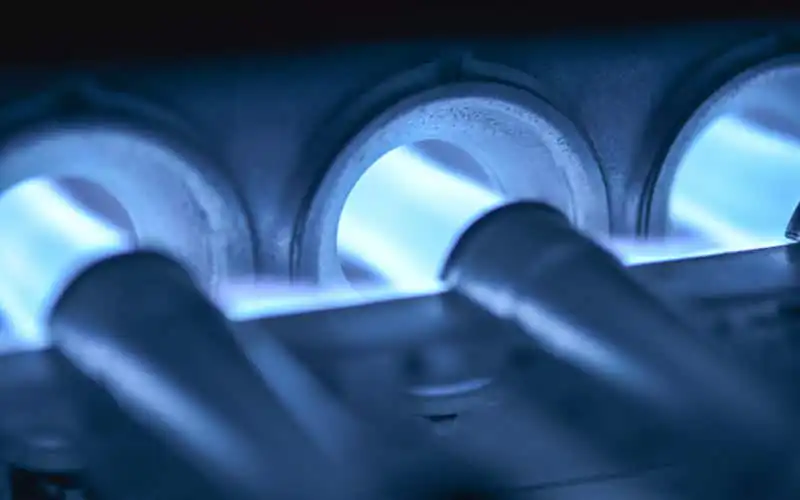
Heating elements: These are coiled or straight resistive wires similar in principle to the element inside an electric oven. They glow orange when hot and are the source of all the heat the furnace produces. Electric furnaces typically have two to five elements, each rated at 5 kilowatts, so a five-element furnace produces 25 kilowatts of heat.
Sequencers: Timed relays that stage the heating elements on and off to prevent electrical surges. Without sequencers, turning on multiple high-draw elements simultaneously would trip breakers or cause voltage dips.
Blower motor and fan: Pulls return air through the system and pushes warmed air into your ductwork. In modern systems, a variable-speed blower motor can adjust fan speed for more consistent airflow and quieter operation.
Air filter: Positioned in the return air path, the filter catches dust, pet dander, and other particles before they can coat the heating elements or blower. Regular filter changes are essential for both efficiency and air quality. Ask about our air filter options for the best filtration for your home.
Limit switch: A safety device that shuts the furnace off if the internal temperature gets too high. This prevents damage if airflow is restricted by a clogged filter or blocked vents.
Transformer and control board: The electrical brain of the system. It interprets signals from the thermostat and manages the sequencing of the heating elements and blower.
Electric Furnace vs. Gas Furnace
The most common question about electric furnaces is how they compare to gas. Here is an honest breakdown.
Operating cost: In most of the country, natural gas costs less per unit of heat than electricity, which makes gas furnaces less expensive to run. In Louisiana, where winters are short and mild, the annual heating cost difference is less significant than it would be in a colder climate. Running an electric furnace for two or three months is very different from running one in Minnesota for seven months. For many Acadiana homeowners, the annual cost difference between gas and electric heat is manageable enough that other factors, like access to gas lines and installation cost, drive the decision.
Upfront cost: Electric furnaces cost less to purchase and install than gas furnaces. There is no gas line to run, no combustion system to vent, and no complex burner assembly. For homes that do not already have gas service, the cost difference of switching can be significant.
Safety: Electric furnaces produce no combustion gases. There is no risk of carbon monoxide from an electric furnace. No gas leak risk either. For homeowners who prioritize safety or who have elderly family members or young children, this is a meaningful advantage.
Efficiency: Both gas and electric furnaces can be rated for energy efficiency. Electric furnaces are essentially 100 percent efficient in converting electricity to heat, meaning no energy is lost up a flue. Gas furnaces vary from about 80 to 98 percent efficiency depending on the model. However, since electricity generation itself is not perfectly efficient, the end-to-end efficiency comparison is more nuanced than just the furnace rating.
Maintenance: Electric furnaces have fewer mechanical parts than gas furnaces. There are no burners, no heat exchangers, no gas valves, and no flue to maintain. This generally means lower maintenance complexity over time. However, heating elements do eventually fail and need replacement, and the electrical components require regular inspection.
Electric Furnace vs. Heat Pump
This comparison matters a lot for Acadiana homeowners because it directly affects your long-term operating costs.
A heat pump does not generate heat the way a furnace does. Instead, it moves heat from outdoor air into your home. Because it is moving heat rather than creating it, a heat pump can deliver two to four times the heating energy for every unit of electricity consumed compared to an electric furnace.
In other words, on a mild 45-degree winter day, a heat pump might use 1 kilowatt of electricity to deliver 3 to 4 kilowatts of heat. An electric furnace uses 1 kilowatt to deliver 1 kilowatt of heat.
For Acadiana homeowners, this efficiency difference matters. Even though heating season is short here, switching from an electric furnace to a heat pump system typically reduces winter heating costs by 30 to 50 percent or more. A heat pump also cools your home in summer, replacing your air conditioner as well, which makes the combined value proposition very strong for Louisiana homeowners.
Many homes with electric furnaces eventually upgrade to a heat pump for exactly this reason. If your electric furnace is aging, it is worth asking your technician to compare the long-term costs of replacing like-for-like versus upgrading to a heat pump.
Electric Furnace Cost
Equipment cost: Electric furnaces are less expensive to purchase than gas furnaces. Residential electric furnaces typically cost $700 to $2,000 for the unit, depending on capacity and brand.
Installation cost: Installing an electric furnace in a home that already has a compatible air handler setup and correct electrical wiring typically runs $1,500 to $3,500 in total installed cost. Homes that need electrical upgrades will pay more.
Replacement cost: If you are replacing an existing electric furnace with a new one of similar type, expect to pay $2,000 to $5,000 installed. If you are switching from gas to electric or making significant changes to your system, costs will be higher.
Operating cost: At current electricity rates in Louisiana, running an electric furnace costs roughly $1.50 to $3.00 per hour of operation at full capacity for a mid-size home. Since Acadiana winters are short and mild, total annual heating costs are modest for most homeowners. A heat pump would reduce this cost significantly, but an electric furnace is a workable choice for many situations.
Signs Your Electric Furnace Needs Attention
Watch for these warning signs:
Blowing cold air: If your furnace is running but not producing heat, one or more heating elements may have burned out, or a sequencer may have failed. This is a common repair on older electric furnaces.
Tripping circuit breakers: Electric furnaces draw significant current. If your breaker is tripping regularly, it could indicate a failing element that is drawing excessive current, or a circuit that is undersized for the load. Our electrical team can diagnose and correct electrical issues safely.
Weak airflow: A clogged filter or a failing blower motor reduces airflow across the heating elements, which reduces heating output and strains the system. Check your filter first, then call for service if airflow remains weak.
Strange smells: A burning smell when the furnace first turns on in the season is often just dust burning off the elements. If the smell persists or is accompanied by burning plastic or electrical odors, shut the system down and call for emergency heating service immediately.
Short cycling: If the furnace turns on and off rapidly without reaching temperature, the limit switch may be triggering due to restricted airflow or an overheating element. This needs professional diagnosis.
How Long Do Electric Furnaces Last?
With proper maintenance, electric furnaces typically last 20 to 30 years. This is longer than most gas furnaces, partly because they have fewer complex mechanical parts. Heating elements and sequencers can be individually replaced as they fail, which extends the practical life of the unit.
That said, as an electric furnace ages, its energy consumption does not improve, and older units may lack the efficiency of modern systems. If your electric furnace is over 20 years old and you are considering what to do next, comparing the cost of continued repairs to a new heat pump installation is worth the conversation.